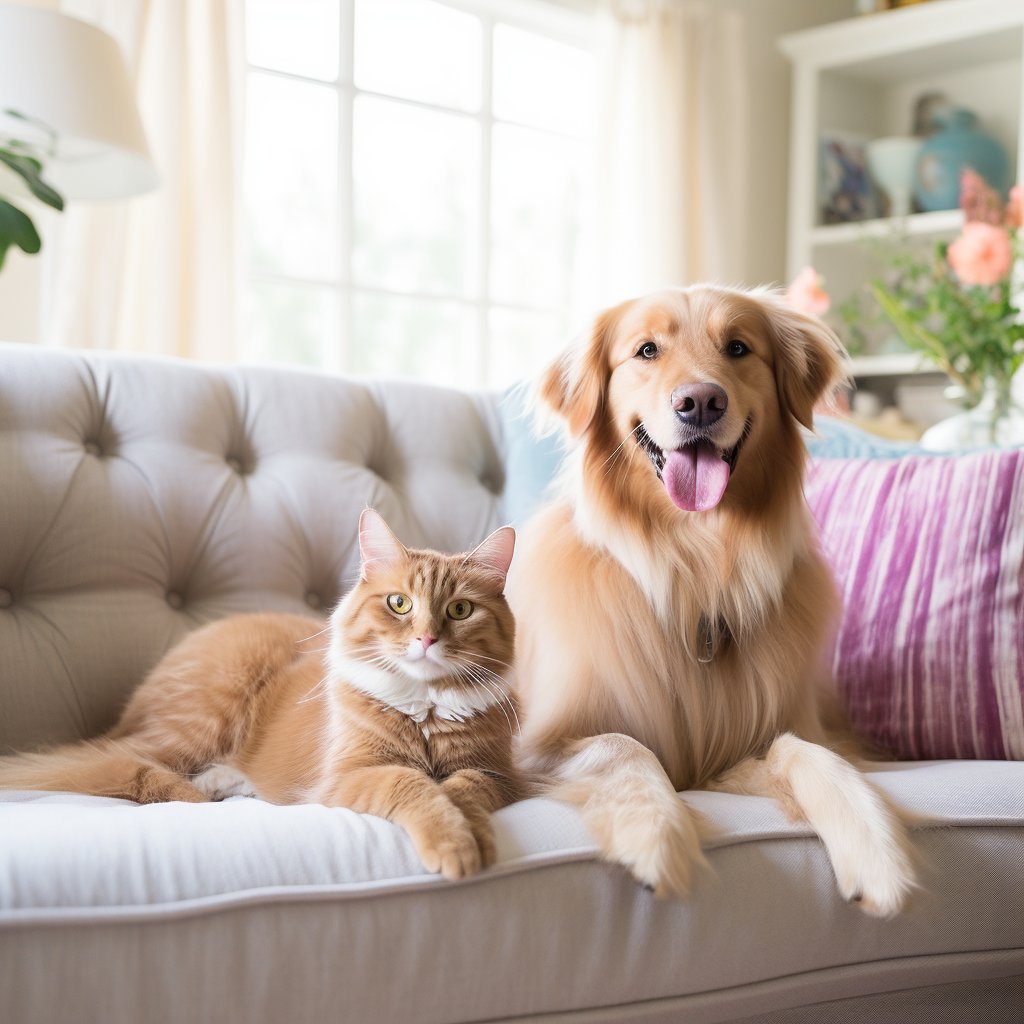
According to National Data, approximately 63% of U.S. Households have a pet. Many of us consider our pets to be an important member of the family and to be honest, sometimes our pets can be easier to love than an argumentative pre-teen!
When it comes time to sell your home and move, you may worry about the impact it will have on your pets. Read on to find out how to minimize the impact on your pets when selling your house and how to best prepare your home for sale with pets in the mix.
Preparing Your Home for Sale
Chewing puppies who are not yet housebroken; incontinent senior cats and dogs; pets who shed so much that you could make a clone of them with their hair… We love our pets, but they can greatly affect the condition and cleanliness of our homes. When it comes time to sell, what issues might need to be addressed prior to putting it on the market?
Repair Damaged Molding or Floors
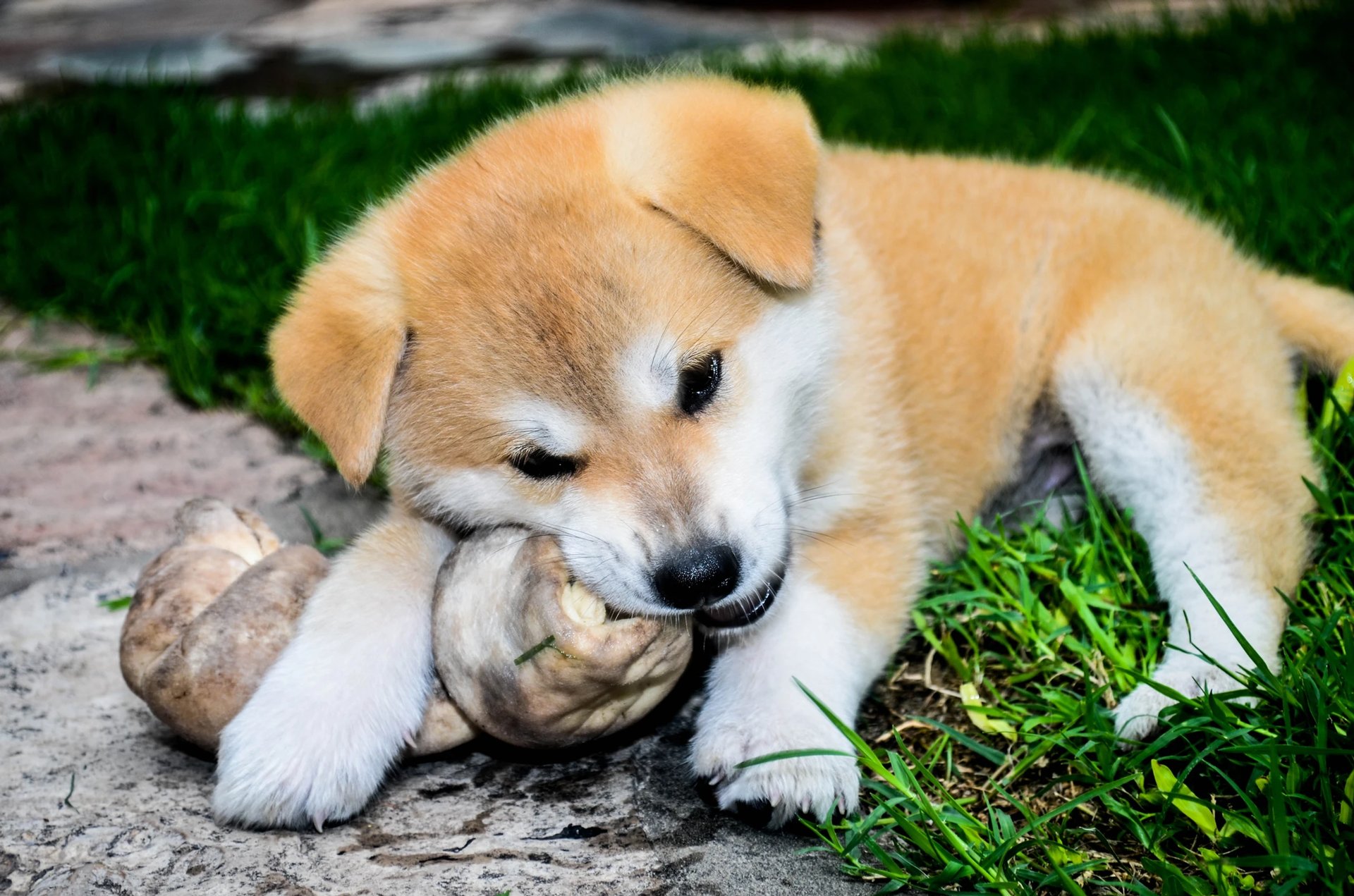
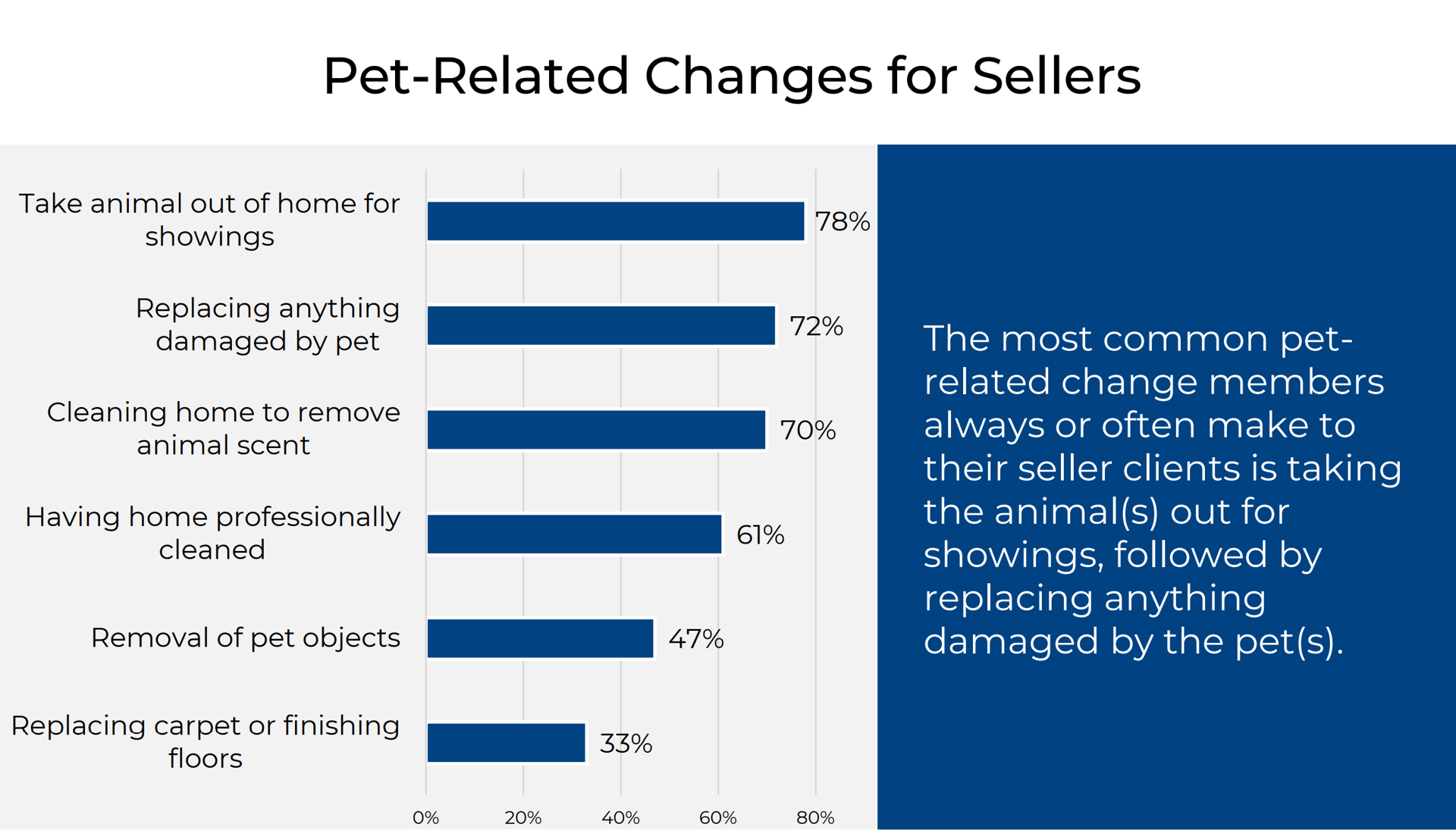
Teething puppies can chew whatever is available to soothe their gums. Sometimes that might be the closest door frame or baseboard. Dogs nails can do incredible damage to beautiful hardwoods. Repair any visibly damaged parts of your house before listing it.
Pet Odors
Sometimes when we live with our pets on a daily basis, we don’t realize that our home has acquired an odor. It is best to do a deep clean not only on our hard goods, but also soft goods that absorb odors: like sofas, rugs and pet and human bedding before listing your house to make sure that everything smells fresh.
Replacing Carpet
As mentioned above, refinishing hardwoods may be necessary if they have been significantly damaged by our pets. Wall to wall carpeting may also need to be replaced before your home is listed if it has been damaged or stained by your pet.
Minimizing Evidence of Pets
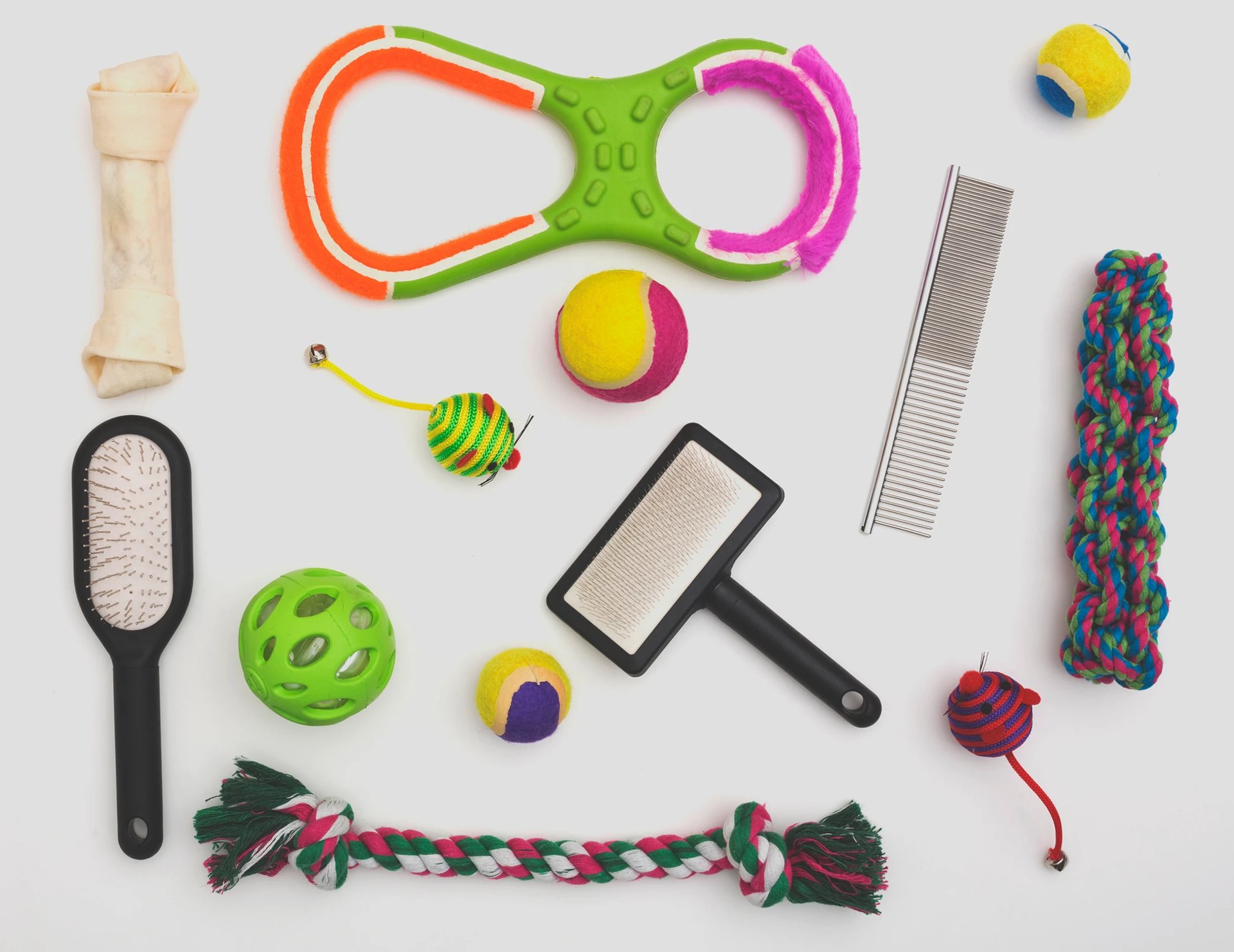
You don’t entirely have to hide the fact that you own pets, but just as you would minimize your own personal belongings and clutter to stage your home, you should do the same for your pet. This will present your house in the best light for sale. Consolidate any toys into one container and put it in a closet. Store any bedding, leashes and food items away, but close enough for easy access to pull out as needed.
If your pet sheds, vacuum or sweep well before putting your house on the market to get up all of the “pine needles” and “tumbleweeds”.
If you have a yard in which your dog goes to the bathroom, clean up all piles of poop. What a turnoff it would be if a potential buyer is admiring the lovely back yard and steps in an unseen pile of poo!
From the NAR website
On the Market
Congratulations, your home is now listed for sale and on the market! Now, what do you do with your pet every time there is a showing?
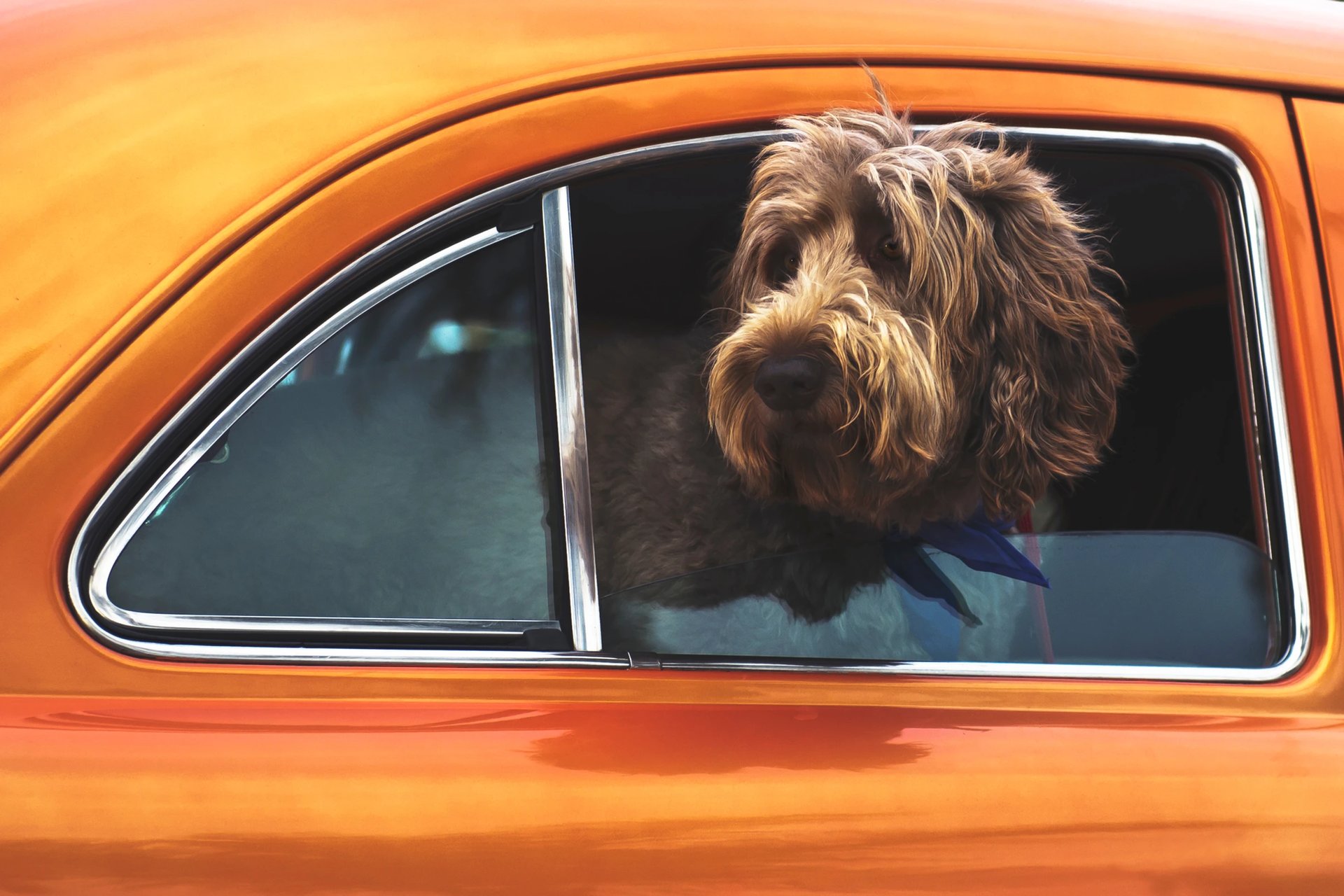
In an ideal scenario, your pet would not be in the house during showings. This eliminates the chances of them getting loose and potential injuries. If Fido is happy to jump in the car and go for a ride, you can take him with you every time there is a showing. If that is not possible, consider leaving him in a crate or a gated room with a note to the Buyer’s Agent not to enter that room or to let your pet out. And if that is not an option, perhaps consider a temporary stay for your pet at a friend or family member’s house or at a boarding facility; at least when the house is initially listed, and showings are more frequent.
Packing and Moving With Pets
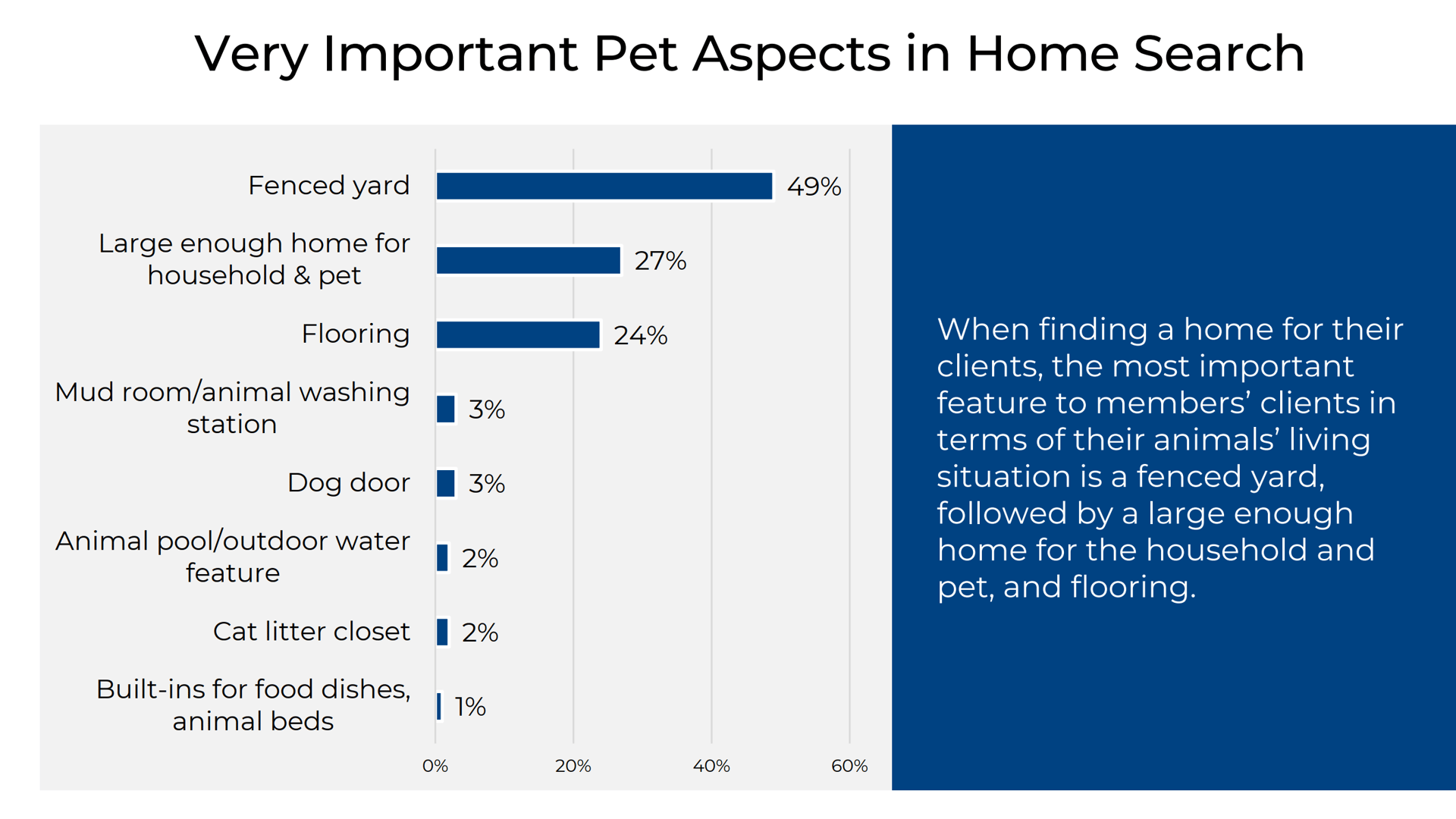
Once you have found the perfect house with tons of pet-friendly amenities, it is time to pack and move to your new home. Pet owners know that any change can stress out our pets. The complete chaos of moving boxes, strangers in the house and furniture being moved is enough to stress both them and us out!
From the NAR website
On moving day, try to keep your pet sequestered in a calm, quiet space so that they can’t see the hubbub of moving and try to dart out the door. If they are used to a crate, that would likely be a comforting, safe space for them. Throughout the packing and moving process, try to keep their routine as normal and unchanged as possible.
Finally, when moving into your new home, initially give your pet one or two rooms to get used to without having complete run of the new house. Put their comfort items such as bedding, toys and food and water bowls in one of these rooms. When they seem adapted and comfortable in the new space, gradually start expanding where they are allowed, until they eventually have run of the whole new house!